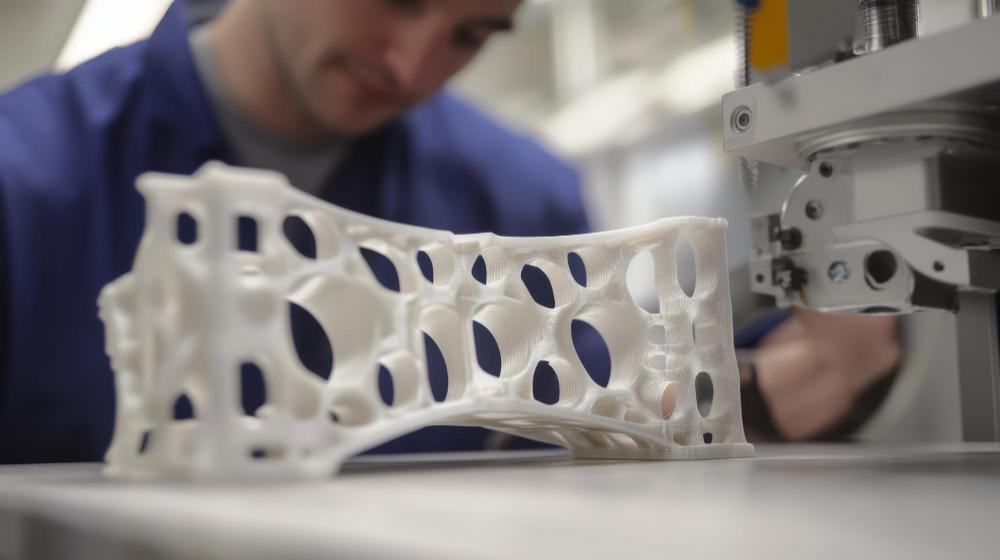
The Imperative of Robust Verification for 3D Printed Parts
The increasing adoption of 3D printing in critical applications, from aerospace to medical, necessitates robust verification. While offering design freedom, mechanical properties of 3D printed parts vary significantly based on material, process parameters, and post-processing. This presents a complex challenge for engineers ensuring reliability in demanding environments.
Traditional manufacturing relies on established material databases. 3D printing introduces anisotropy – properties differing by stress direction – due to its layer-by-layer process. Invisible internal defects like voids complicate predicting part behavior under real-world loads, especially over extended periods or cyclical stress.
Inadequate stress testing can lead to component failures or catastrophic system breakdowns, causing operational disruptions and safety concerns. For industries where failure is not an option, like aerospace, rigorous validation is a regulatory requirement. Without reliable methods, 3D printing's full potential remains untapped.
The rapid evolution of 3D printing materials means standardized testing protocols lag innovation. Engineers encounter novel materials lacking comprehensive mechanical data. This knowledge gap makes selecting appropriate testing and interpreting results challenging. Specialized, adaptable stress testing strategies are paramount.
Underlying Factors Affecting Mechanical Integrity
- Process Parameter Variability: Minor deviations in printing temperature, layer height, or speed alter material density and internal stress. This leads to inconsistencies in mechanical properties across batches or within a single print.
- Material Anisotropy and Defects: Layer-by-layer printing causes anisotropic properties, where strength varies with orientation. Microscopic voids or incomplete fusion act as stress concentrators, leading to premature failure.
- Lack of Standardized Testing: Many novel 3D printing materials lack comprehensive, accepted testing standards. This makes comparing performance difficult, leading to uncertainty in material selection.
Strategies for Verifying Strength and Durability
1. Advanced Non-Destructive Testing (NDT)
Implementing advanced non-destructive testing is crucial for identifying internal defects without compromising part integrity. X-ray computed tomography (CT) offers detailed 3D insights into internal structures, revealing voids and incomplete fusion. Ultrasonic testing also detects subsurface flaws.
NDT allows early detection of potential failure points, enabling corrective actions or rejection of faulty parts. This comprehensive internal quality assessment enhances confidence in the structural integrity of 3D printed components for critical applications.
2. Comprehensive Mechanical Characterization
Beyond basic tensile strength, comprehensive mechanical characterization involves tests simulating real-world loading. This includes fatigue testing for cyclical loads, creep testing for long-term deformation, and impact testing for resistance to sudden forces.
Testing must also consider environmental factors like temperature extremes, humidity, and chemical exposure, which alter material properties. Rigorous conditions help engineers understand operational limits and predict lifespan accurately.
3. Digital Twin and Predictive Modeling
Developing a "digital twin" of 3D printed components offers powerful predictive analysis. This virtual model mirrors the physical part, incorporating material properties, geometry, and process parameters. Real-time sensor data from physical tests feeds this twin.
This digital representation, combined with advanced finite element analysis (FEA) and machine learning, allows virtual stress testing and failure simulation. It enables engineers to predict part performance, optimize designs, and identify weaknesses before physical manufacturing, reducing development cycles. Nextrusionlab excels in such modeling.
Potential Challenges and Mitigation
- High Initial Investment: Advanced NDT and digital twin platforms require significant capital.
- Recommendation: Implement a phased approach, focusing on critical needs. Partner with specialized labs like Nextrusionlab to mitigate upfront costs.
- Complexity and Expertise: Advanced methods require specialized knowledge for setup and interpretation. Lack of in-house expertise can lead to erroneous results.
- Recommendation: Invest in personnel training or recruit experts.
- Data Overload and Integration: Vast data from NDT and simulations can be overwhelming. Integrating it for actionable insights presents a challenge.
- Recommendation: Implement robust data management and analytical tools. Develop clear data collection and interpretation protocols.
Comments 3


Sadie Snyder
5days agoThank you for the positive feedback! We aimed to make the content both informative and accessible for our readers.
Reply
Connie Diaz
7days agoThe section on digital twins and predictive modeling is particularly insightful. It's great to see how cutting-edge technology is being applied to enhance reliability in additive manufacturing.
Reply
Walter Tucker
7days agoThis article provides a very clear and concise overview of the challenges and solutions in stress testing 3D printed parts. The structured approach makes complex information easy to digest.
Reply